콜릿은 소경 가공에서 전체 원주 그립과 0.005mm급 동심도로 죠 척을 능가합니다. BQUQ는 ISO9001 인증 하에 두 시스템을 모두 가공하며, 12시간 내 견적을 제공합니다.
콜릿 vs 죠 척: 소경 가공을 위한 정밀 워크홀딩
소경 바 가공에서 콜릿은 동심도와 반복 정밀도라는 두 가지 핵심 지표에서 죠 척을 능가합니다. 콜릿은 테이퍼와 동심으로 연삭된 보어가 전체 원주를 그립하는 반면, 척은 3개 또는 6개의 죠에 힘을 집중시키고 더 많은 움직이는 부품을 갖기 때문입니다. 콜릿은 일반적으로 0.005mm급 런아웃을 유지합니다. 소경에서 죠 척은 일반적으로 출고 상태에서 한 자릿수 이상 느슨합니다. 척은 그립 범위, 원시적인 클램핑 힘 및 대구경 가공에서 우위를 점합니다.
콜릿 대 척의 논쟁은 사실상 직경의 논쟁입니다. 대략 25–30mm 미만에서는 콜릿이 정밀한 해답입니다. 단순한 형상(연삭된 보어, 연삭된 콘, 마모될 죠 메커니즘 없음) 덕분에 동심도, 반복성, 진원도가 더 우수합니다. 이 범위를 넘어서거나 가공물의 크기가 매우 다양할 때는 죠 척이 그립 범위 내의 모든 것을 고정하고 분할 콜릿이 따라올 수 없는 클램핑 힘을 제공하므로 죠 척이 주도권을 잡습니다. 작업별로 올바른 시스템을 선택하는 것이 어느 한쪽을 만능 해법으로 옹호하는 것보다 낫습니다.
각 시스템의 실제 의미
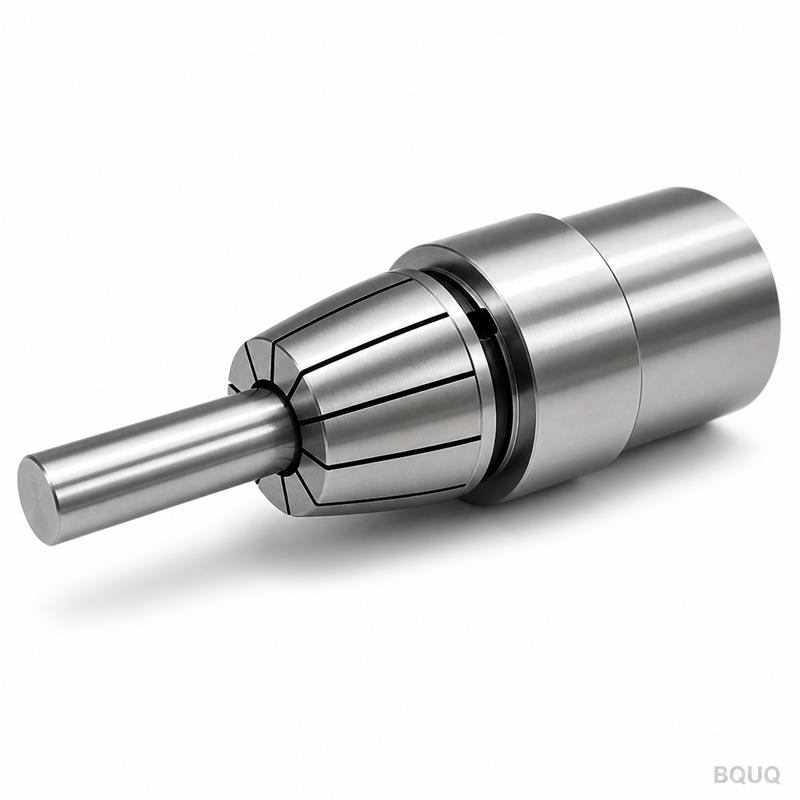
콜릿 워크홀딩 시스템은 테이퍼진 슬리브(또는 이를 고정하는 척)가 소재의 전체 원주를 감싸며 닫히는 방식입니다. 가장 간단한 형태(자동 선반 또는 스위스 선반의 스프링 콜릿)에서는 슬리브가 콘으로 당겨지고 슬롯형 핑거가 균일하게 닫힙니다. 그립은 바 주위에 연속적이며, 그립하는 보어는 시팅 콘과 동심으로 연삭된 동일한 표면입니다.
죠 척은 메커니즘입니다. 스크롤 또는 웨지 플레이트가 3개, 4개 또는 6개의 죠를 동시에 안쪽으로 이동시킵니다. 죠는 개별 지점이나 짧은 호에서 그립하며, 작동부와 공작물 사이의 메커니즘(스크롤, 슬라이드, 죠 마운팅)에는 콜릿에는 없는 유격, 마모 및 변형이 존재합니다.
| 속성 | 콜릿 (스프링) | 죠 척 (3죠 자동심동) |
|---|---|---|
| 그립 접촉 | 전체 원주 | 3점/호 |
| 소경 시 일반적인 런아웃 | 0.005–0.010 mm급 | 0.02–0.05 mm (출고 상태 일반적) |
| 그립 범위 | 한 사이즈 ± 약간의 여유 | 죠 이동 범위, 넓음 |
| 클램핑 힘 | 중간, 드로튜브에 제한적 | 높음, 기계적으로 증폭됨 |
| 움직이는 부품 | 없음 (슬리브가 휨) | 스크롤/웨지, 죠, 슬라이드 |
| 마모 부품 | 보어, 콘 | 죠 웨이, 스크롤, 죠 |
| 최적 직경 범위 | 소경 (대략 25–30mm 미만) | 중대경 |
수치는 일반적인 업계 값이지 사양 경쟁이 아닙니다. 연삭되고 지시된 소프트 죠를 갖춘 척은 콜릿의 런아웃에 근접할 수 있고, 더러운 테이퍼의 콜릿은 좋은 척보다 더 나쁠 수 있습니다. 구조적인 요점은 콜릿이 오류 원인이 더 적다는 것입니다.
콜릿의 동심도가 더 나은 이유
콜릿의 동심도는 형상에서 비롯되고, 척의 동심도는 메커니즘에서 비롯됩니다. 콜릿 보어는 시팅 콘과 동일한 셋업 계열에서 연삭되므로, 콘이 안착되면 보어는 콜릿의 런아웃 등급 내에서 스핀들 축에 위치합니다. 그립력은 균일하게 휘어지는 핑거에 의해 원주 주위에 균등하게 적용됩니다. 한쪽에 더 세게 그립하는 죠가 없습니다.
죠 척은 3개의 죠를 동일한 거리로 이동시켜 동심도를 맞춥니다. 이는 스크롤 또는 웨지 메커니즘이 제조 및 유지 관리되는 만큼만 정확합니다. 죠 웨이 마모, 스크롤 백래시, 죠 마운팅 오류는 모두 편심을 증가시키며, 죠가 중심에서 멀어질수록 오류는 커집니다. 죠가 내부 한계에 가까운 소경에서는 메커니즘의 절대 오류가 부품 크기의 상당 부분을 차지하게 됩니다.
| 오류 원인 | 콜릿 | 죠 척 |
|---|---|---|
| 그립 형상 | 콘에 연삭된 보어 | 메커니즘에 의한 죠 위치 |
| 마모 영향 | 느린 보어/콘 마모 | 스크롤, 웨이, 죠 모두 마모 |
| 그립력 대칭성 | 설계상 균일 | 죠/스크롤 상태에 따라 다름 |
| 부품 크기 영향 | 모든 보어에서 등급 유지 | 소경에서 오류 증가 |
| 재그립 반복성 | 매우 높음 | 양호~보통 |
반복성: 양산의 핵심 지표
양산에서는 절대 정확도보다 반복성이 더 중요할 때가 많습니다. 부품은 매 사이클마다 동일한 중심으로 돌아와야 합니다. 콜릿이 여기서 기준이 됩니다. 동일한 콜릿이 동일한 바 크기를 그립하면 핑거의 탄성 변형 외에는 움직이는 것이 없고 핑거는 스프링 작용으로 동일한 보어로 돌아오기 때문에 본질적으로 동일한 위치로 돌아옵니다.
죠 척은 상태가 좋을 때 반복성이 좋지만 메커니즘을 통해 반복되며 메커니즘은 드리프트(이탈)합니다. 재연삭 또는 재절단된 죠, 스크롤에 낀 칩, 척 본체의 열 변화는 모두 사이클 간 그립 중심을 이동시킵니다. 직경과 위치에서 0.01mm 단위를 유지해야 하는 작업에서 이 드리프트는 안정적인 공정과 지속적인 조정이 필요한 공정의 차이를 만듭니다. 그러나 한 기계에서 다양한 부품 크기를 혼합 생산하는 경우, 척의 즉각적인 범위 조정이 콜릿 교체보다 효율적이기 때문에 두 시스템 모두 같은 현장에 공존하는 것입니다.
클램핑 힘과 강성
죠 척의 확실한 장점은 힘입니다. 웨지 또는 레버 척은 드로바 또는 유압 힘을 분할 콜릿이 따라올 수 없는 죠 클램핑 힘으로 증폭시키며, 이 힘이 대구경 또는 단속 절삭 가공물을 견고하게 고정합니다. 콜릿은 드로튜브 힘을 콘에 분산시켜 그립합니다. 바 공급 선삭과 마무리 가공에는 충분하지만, 대형 단면의 중절삭에는 한계가 있습니다.
절충점은 자국과 변형입니다. 콜릿은 (더 낮은) 그립력을 전체 원주에 분산시키므로 세 지점에 힘을 집중시키는 죠보다 연질 또는 박육 소재에 자국을 덜 남깁니다. 박육 튜브와 완성된 표면의 경우, 총 힘이 낮음에도 불구하고 콜릿이 더 부드러운 선택입니다. 변형을 결정하는 것은 힘의 크기뿐만 아니라 힘의 분포이기 때문입니다.
| 작업 특성 | 콜릿 선호 | 죠 척 선호 |
|---|---|---|
| 약 25mm 미만의 바 직경 | 강력함 | — |
| 대구경 | — | 강력함 |
| 한 기계에서 다양한 크기 혼합 | — | 강력함 |
| 중절삭, 단속 절삭 | — | 강력함 |
| 박육 / 연질 소재 | 강력함 | — |
| 0.01mm 단위 정밀 마무리 가공 | 강력함 | — |
| 부품 간 빠른 교체 | — (콜릿 교체가 빠른 경우) | 강력함 |
그립 범위: 척의 결정적 우위
범위에 있어서 척은 적수가 없습니다. 하나의 3죠 척은 죠 이동 범위 내의 모든 바(수 밀리미터부터 최대 용량까지)를 그립할 수 있지만, 콜릿은 한 사이즈와 약간의 여유만 그립합니다. 매시간 다른 직경을 가공해야 하는 잡업(job shop)은 매시간 콜릿을 교체할 수 없으므로 척을 사용합니다. 1년 내내 동일한 바를 가공하는 생산 라인은 콜릿이 더 저렴한 비용으로 공차를 유지할 수 있는데 척의 런아웃을 감수할 이유가 없습니다.
현대적인 중간 지점은 콜릿 척입니다. 콜릿을 고정하는 척 본체로, 작업자에게 죠 척의 장착 편의성과 콜릿급 동심도를 제공하며, 몇 초 만에 콜릿을 교체할 수 있는 퀵 체인지 설계도 있습니다. 자동 선반과 스위스 선반에서 콜릿 척은 표준 워크홀딩 방식이며, 일반 CNC 선반에서는 소경 정밀 가공이 작업의 대부분을 차지할 때 선택되는 옵션입니다. 당사의 2J 콜릿 척 가이드는 스위스 및 자동 선반용으로 가장 일반적인 콜릿 척 제품군을 다룹니다.
어떤 것을 구매해야 할까요?
직경 및 혼합 테스트를 적용하십시오. 작업이 대략 25–30mm 미만의 바이고, 엄격한 공차를 유지하며, 합리적인 수량으로 가공된다면 콜릿 또는 콜릿 척이 정밀한 해답입니다. 그리고 바 공급식 기계에서는 기계 구조상 콜릿이 필요하므로 사실상 선택의 여지가 없습니다. 작업물이 크거나, 크기가 다양하거나, 단속 절삭이 많다면 죠 척이 실용적인 해답이며, 런아웃은 소프트 죠와 지시(indication)로 관리하지 제거할 수는 없습니다.
두 가지 모두 수행하는 샵의 경우, 표준 배치는 범용으로는 척을, 정밀 바 작업용으로는 콜릿 척을 사용하고 셋업별로 교체하는 것입니다. 정밀 작업이 주를 이룬다면 먼저 콜릿 시스템을 구매하고 특수 사이즈용으로 척을 유지하십시오. BQUQ는 이 결정의 양쪽 모두를 가공합니다. 소경 바 작업용 36/46/52/60/630/643 시리즈의 자동 선반 스프링 콜릿과 콜릿 워크홀딩 중심으로 설계된 기계용 스위스/2J 콜릿 척을 모두 하나의 둥관 공장에서 ISO9001 관리 하에 0.005mm급으로 연삭합니다. 자동 선반 콜릿 범위와 스위스 및 2J 콜릿 척을 확인하고, 제품군 시스템에 대한 자동 선반 콜릿 가이드를 읽은 후, 부품 크기와 공차를 sc@bquq.com으로 보내시면 12시간 이내에 추천 및 견적을 받아보실 수 있습니다.
자주 묻는 질문
Q: 소형 부품에서 콜릿이 죠 척보다 더 정확한 이유는 무엇인가요?
A: 콜릿은 시트와 공작물 사이에 메커니즘이 없이 콘과 동심으로 연삭된 보어로 그립합니다. 죠 척은 죠, 슬라이드 및 마모가 있는 스크롤 또는 웨지를 통해 동심도를 맞추며, 각각은 소경에서 가장 큰 영향을 미치는 오류를 추가합니다.
Q: 콜릿 대신 죠 척을 사용해야 하는 경우는 언제인가요?
A: 직경이 크거나, 사이즈가 자주 변경되거나, 죠 수준의 클램핑 힘이 필요한 중절삭 가공일 때입니다. 하나의 척은 죠 이동 범위 내의 모든 것을 그립할 수 있지만 콜릿은 한 사이즈만 그립합니다. 범위와 힘이 척의 존재 이유입니다.
Q: 죠 척도 콜릿만큼 정확할 수 있나요?
A: 소프트 죠를 제자리에서 보링하고 주의 깊게 지시하면 척은 특정 부품 직경에 대해 콜릿 정확도에 근접할 수 있습니다. 그러나 새로운 사이즈마다 다시 셋업해야 하는 반면, 콜릿의 정확도는 내장되어 있습니다. 콜릿은 편의성과 일관성에서 우위에 있습니다.
Q: 콜릿은 연질 또는 박육 소재를 손상시키나요?
A: 죠보다 덜 손상시킵니다. 콜릿은 그립을 전체 원주에 분산시켜 압력이 균일하지만, 죠는 세 지점에 힘을 집중시킵니다. 박육 튜브의 경우, 릴리프(relieved) 콜릿 보어가 그립을 더욱 분산시키고 부드럽게 할 수 있습니다.
Q: 콜릿 척이란 무엇이며 죠 척과 어떻게 다른가요?
A: 콜릿 척은 죠 대신 콜릿을 고정하는 척 본체로, 빠른 장착과 콜릿급 동심도를 결합합니다. 콜릿당 한 가지 바 사이즈만 그립하므로 다양한 사이즈의 잡업보다는 일관된 바의 양산에 적합합니다.
BQUQ 엔지니어링 팀 작성. BQUQ는 중국 둥관에 위치한 ISO9001 인증 공장으로, CNC 가공, 금속 스탬핑, 맞춤형 스프링, 방열판 및 콜릿 라인을 한 공장에서 운영합니다. 도면을 sc@bquq.com 또는 WhatsApp +86 13713157787로 보내시면 12시간 이내에 견적을 받아보실 수 있습니다. www.bquq.com